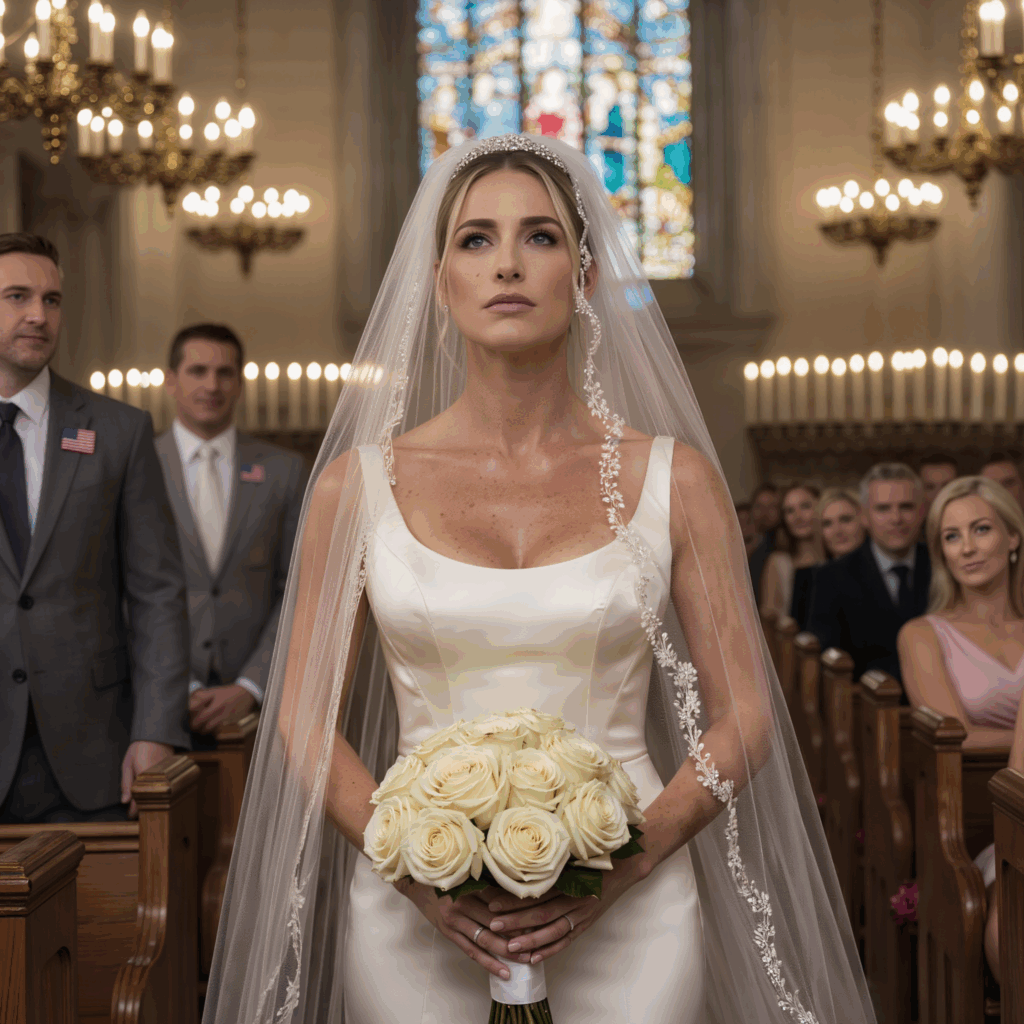
To everyone else in that sunlit church in upstate New York, it was just another pretty wedding. White rose petals, mason jars with fairy lights, iced tea and lemonade waiting on a table out on the lawn, a paper flag stuck in each pitcher “for aesthetics,” as the planner said. To me, it was a hallway of ghosts.
My bouquet felt heavier than it should have. White roses, the kind my dad used to bring home for my birthdays. Funny how they smelled different when you’re holding them alone.
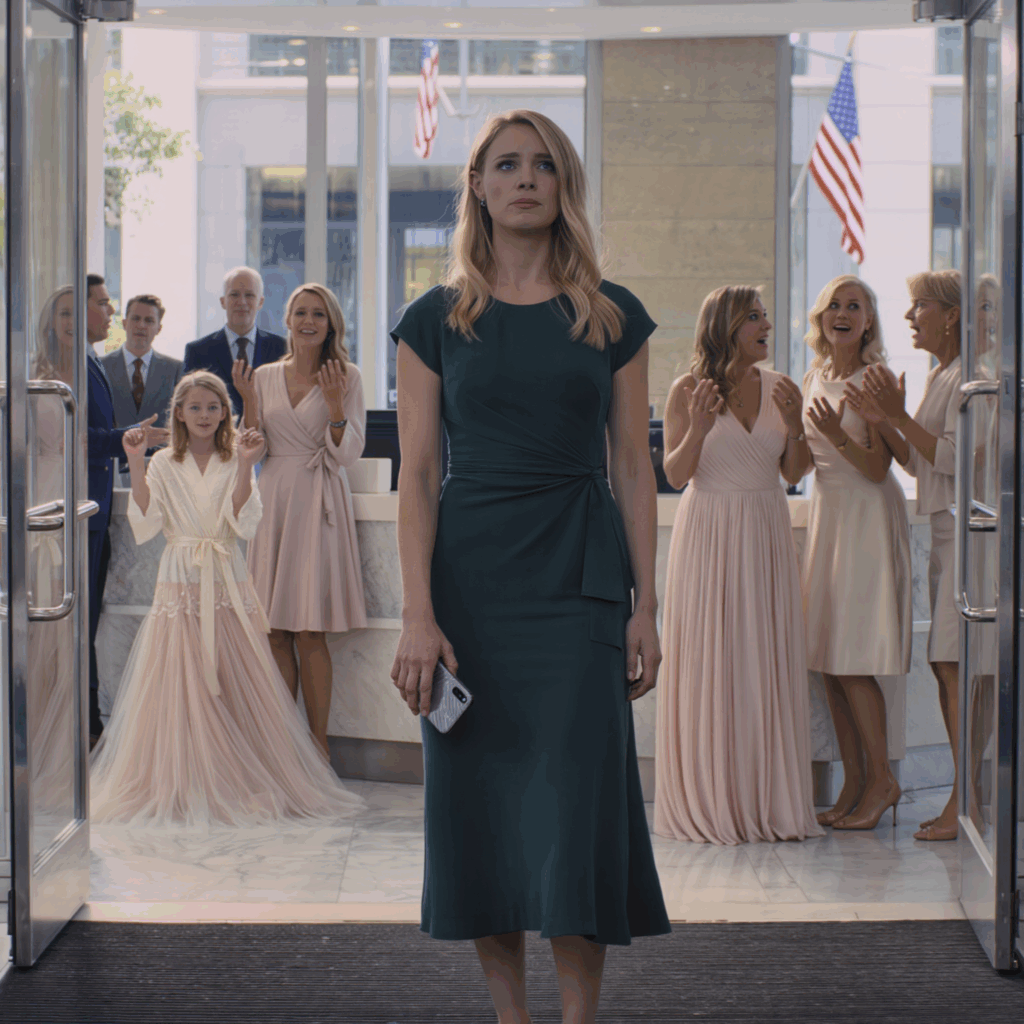
The aisle was really, truly empty beside me. My dad refused to walk me because my stepmom said I was stealing her daughter’s spot. The music started. Everyone turned to look at me, alone. Somewhere in the back row, someone lifted their phone for a picture. Somewhere in the front row, my future mother-in-law dabbed her eyes. I told everyone my dad was sick, that it was sudden, that he wished he could be here.
Lies glide easier than tears when mascara costs a fortune.
The violins wove through the air like nothing was wrong. Every note stabbed a little deeper, reminding me of the one thing missing: him. That gap to my right where a father’s arm should have been felt like its own spotlight, a private humiliation wrapped in ivory satin.
I inhaled. One slow breath in, steady like my therapist told me. Exhale. Left foot forward. Smile for the cameras, for my groom, for everyone who didn’t know the storm behind that smile.
Then my phone buzzed, tucked secretly in the seam of my dress. One vibration. Then another. Then another.
My dad’s name flashed across the tiny screen embedded in the fabric. We need to talk.
Even on my wedding day, he still had the power to shake me.
I glanced toward the church doors, half expecting him to walk in anyway, contrite and changed, the way movies promised fathers eventually did. He didn’t. The double doors stayed stubbornly shut, stained glass bleeding red and gold light onto the floor.
That’s when I realized maybe the aisle was empty for a reason.
“Lydia,” someone whispered behind me.
I turned my head, just enough to see a figure step out of the pew at the very back. Not my father. Not Patricia with her perfect hair and tighter smile. It was my mentor, Eleanor, in a bright teal scarf that clashed beautifully with every muted pastel in the room. She walked down to me with her sure, unhurried stride, the same one she had in every lecture hall, every design review.
“You don’t walk alone, kid,” she murmured, offering her arm like it was the most natural thing in the world. “You built an entire life without them. You can let someone who saw that walk the last thirty steps.”
My throat tightened. For a heartbeat, the church blurred at the edges. Then I nodded, slipped my hand through her arm, and we moved together.
One father missing. One unexpected person beside me. One choice not to crumble.
Later, after vows and cake and photos on the lawn with the little flag magnets glinting off the catering coolers, I slipped into the bridal suite alone. I dug my phone from the hidden pocket in my dress.
One hundred missed calls.
Dad. Dad. Dad. Unknown. Dad. Patricia. Dad.
I stared at the number at the top of the screen—100—and felt something colder than anger settle in. One hundred times he’d reached for me today. One hundred times too late.
I set the phone face-down on the vanity next to my bouquet and my lipstick. Then, just for a moment, I closed my eyes and pressed my thumb against the tiny gold locket resting at the base of my throat.
My mother’s locket.
When no one stands beside you, stand taller.
That line had followed me my whole life. Long before this aisle. Long before Eleanor. Long before my stepmother ever accused me of stealing anything.
I was sixteen when everything changed.
Dad met her at a real estate gala downtown, the kind of place with ice sculptures and shrimp towers and people who said things like “portfolio diversification” without blinking. Patricia was polished, charming, all pearls and praise, the kind of woman who could smile while calculating. I remember how she’d laugh at everything he said, touching his arm just a second too long.
Six months later, she was living in our house.
I told myself I was fine with it. I told myself Dad deserved to be happy. That’s what you say when you’re a teenager who doesn’t want to sound selfish. I pushed my mother’s memory into the corners of our picture frames and swallowed the lump in my throat when Patricia’s shoes clicked down the hallway that used to echo only with Dad’s slower, heavier steps.
I tried. I really did. I told myself, Dad deserves to be happy.
But Patricia never wanted a daughter. She wanted a mirror, and I didn’t fit her reflection.
Her own daughter, Haley, was a year younger than me. Soft-spoken, perfectly dressed, and effortlessly adored. The kind of girl who never had to try to be loved. When Dad looked at her, his face softened in a way I hadn’t seen in years. When he looked at me, he hesitated, like he was trying to reconcile two pictures that didn’t quite line up anymore.
It started small. Comments about my clothes. My attitude. My tone.
Patricia would smile, the kind of smile people practiced in bathroom mirrors, and tell me she was just trying to help me be more ladylike.
“Haley found the sweetest sundress at that boutique on Main,” she’d say, eyeing my ripped jeans. “You should come with us next time, Lydia. Men don’t usually fall in love with… statements.”
Then came the comparisons.
“Haley’s grades are better. You should study with her.”
“You should learn to cook like Haley. She made the loveliest lemon bars for the church bake sale.”
“Your father worries you might end up alone, Lydia.”
Every word chipped away at something sacred between Dad and me. Every sentence sounded like an exit door closing.
One night, I overheard them arguing. My name sliced through the air like broken glass.
“She’s just jealous,” Patricia said, voice low and sharp. “You give her too much freedom. She’s trying to take what’s Haley’s. She’s my daughter.”
Dad’s voice cracked. “She’s my daughter too.”
“Exactly,” Patricia snapped. “And she’s using that to manipulate you.”
I stood in the hallway, barefoot on the cold hardwood, clutching the last birthday card my mom had ever written to me. My name in her handwriting blurred. For a second, I thought about walking into the kitchen, about asking Dad to look me in the eye and tell me what he believed.
I didn’t.
That night, Dad didn’t come to my room like he used to. No soft knock. No goodnight. Just silence.
Weeks later, he missed my choir performance. Said he forgot. Then he missed my graduation photos. Said something came up.
Each absence was its own betrayal, small on its own, crushing in a pile.
When I left for college, Patricia stood by the car in the driveway, arms crossed lightly, smile polite and hollow. Our old front porch, now dressed with a seasonal wreath and a little patriotic banner with tiny American flags, had never looked less like home.
“Good luck, Lydia,” she said, brushing invisible dust off my sleeve like she owned me. “Don’t forget where you came from.”
It sounded like a warning, not a blessing.
I turned to Dad for one last hug. He held me, but it felt formal, like two people saying goodbye out of duty, not love.
“I’m proud of you,” he said, the words landing somewhere between us instead of on me.
“That’s a good line,” I answered, trying to make a joke out of the ache. “You practice it?”
He tried to smile. “Call when you get there.”
“I will.”
That night, when I unpacked in my tiny dorm room, I found a small velvet box hidden between my hoodies and textbooks. Inside was my late mother’s locket, the one Patricia had once called tacky and “a bit much for everyday wear.”
A note in Dad’s handwriting was tucked underneath.
Your mom would be proud. Don’t let anyone dim that light.
I held that locket so hard it left a mark in my palm. I whispered a promise to the woman I missed more than anyone.
When no one stands beside you, stand taller.
It was the first real bet I ever made with myself—my private wager that I would never again shrink to fit someone else’s frame.
The first year on my own felt like learning to breathe underwater.
College wasn’t glamorous. It was cheap coffee, sleepless nights, and secondhand everything. My roommate had a boyfriend who played video games until 3 a.m.; I had a stack of architecture textbooks and a part-time job at a diner off campus where the American flag hung crooked over the cashier and regulars ordered the same $8.99 breakfast specials every morning.
I waited tables between classes, pretending my feet didn’t ache and my pride wasn’t bleeding. Every tip felt like proof I could survive without anyone’s permission. Ten dollars. Twelve. On one miraculous Saturday, seventy-three.
Sometimes when I walked past families laughing over dinner, I’d feel that familiar sting, a phantom limb where a normal family should have been. I’d clutch my mother’s locket like it was armor and whisper her words again.
When no one stands beside you, stand taller.
My major was architecture. A choice Dad once called impractical for a girl.
“Long hours, unstable income,” he’d said over dinner, glancing at Patricia, who nodded as if she were chairing a board meeting about my future. “You sure you don’t want something… steadier? Teaching, maybe? Nursing?”
“Buildings outlive opinions,” I’d replied.
That sentence became fuel.
I traced blueprints late at night in the campus library, headphones blasting playlists I couldn’t afford a premium subscription for, eyes burning from exhaustion. The library staff knew me by name. Lydia Hart—the girl who never went home for breaks, the one always hogging the outlet by the far corner window.
During my junior year, I met Eleanor Pierce, a retired architect who lectured part-time. She wore bright scarves, spoke like thunder, and saw right through excuses.
The first time she reviewed my design, she stared at my sketches for a long moment, lips pursed.
“You have vision, kid,” she finally said. “You just don’t believe it yet.”
She became my mentor. Tough, unfiltered, but deeply kind. She’d bring me coffee during all-nighters and tell stories about being the only woman in the boardroom back in the eighties.
“People underestimate women until we make them regret it,” she’d grin, tapping my drawing with a perfectly manicured finger. “Use that. Don’t run from it.”
Under her guidance, I landed an internship at a boutique firm in New York the summer before graduation. I couldn’t afford the city, but I made it work. Couch surfing. Dollar pizza. Sketching buildings between subway stops.
When my first paycheck came—a little more than $1,200 after taxes—I stared at the number like it was a secret code. I sent half back to pay down student loans. The other half went into a savings account I titled on the banking app with one word.
Freedom.
Years blurred from intern to assistant, assistant to lead designer. Every promotion felt like reclaiming a piece of myself Patricia had tried to erase. There were late-night deadlines, client tantrums, and projects that died after months of work. There were also moments when I’d stand in front of a finished building, sun glinting off its windows, and think, I did this. My hands turned pain into something people could walk through.
There were lonely nights, too. Birthdays spent in empty apartments, scrolling through photos of Dad and Haley smiling on social media. Patricia always tagged them #familygoals.
I stopped checking after a while. My world became my work. I poured everything into it—pain, hunger, hope—and slowly, I built something solid.
At twenty-nine, I launched my own studio, Heartline Designs. It started in a cramped, rented space above a bakery in Brooklyn. The walls smelled like cinnamon and ambition. I bought a secondhand drafting table off Craigslist and a $40 flag print from a thrift store because the red and blue in it reminded me that this was my place now, not anyone else’s.
Clients came slow at first. A couple renovating the upstairs of their brownstone. A retired teacher wanting her kitchen opened up “just enough to fit the grandkids.” A nonprofit looking for someone cheap to help reimagine a run-down community center.
Word spread—the story of the young architect who rebuilt old homes with soul.
My first big project was that community center in Brooklyn, funded by a nonprofit that believed in women-led firms. We transformed an abandoned brick shell into a place with light, warmth, and a roof garden where kids could plant tomatoes and forget, for a little while, that the world could be cruel.
When we unveiled it, Eleanor stood in the front row, beaming like the mayor.
“Your mother would have loved this,” she whispered, squeezing my hand.
I wanted to believe that. I chose to.
By thirty-two, I owned the entire building above the bakery. By thirty-three, I bought my own home. Not a mansion, but mine. Every brick, every beam, earned.
Still, I kept my success quiet. Online, I posted sunsets and coffee cups. Not boardrooms or contracts. When Dad called on holidays—which he did less and less—I told him I was keeping busy. He never asked what that meant.
Sometimes I wondered if Patricia still thought I was chasing her daughter’s shadow. Standing on the balcony of my office, city lights glimmering below like fallen stars, I finally understood the truth.
I wasn’t stealing anything.
I was reclaiming everything that was already mine.
The message came on a Sunday afternoon.
Short. Almost apologetic.
Haley’s getting married. She’d love for you to come.
It was from Dad. No “How are you?” No acknowledgment of years of silence. Just a polite invitation, like I was a distant cousin, not his daughter.
I stared at the text for a long time. Part of me wanted to delete it. Another part—the little girl still clutching that locket—whispered that maybe this was the moment. The bet coming due. The aisle I chose for myself intersecting with the one I’d been pushed off.
Two weeks later, I drove back to the town I’d once fled from. Same highway signs. Same diner off Exit 32 with the faded flag in the window. Same church, with the same stained-glass windows that used to cast colors across my childhood on Sundays.
Patricia spotted me first.
Her smile was thin and tight, the kind women wear when they realize their plan didn’t quite work. She walked over in a dress that probably cost more than my first month’s rent in New York, heels clicking like punctuation marks.
“Lydia,” she said, surprise flattening quickly into something like calculation. “Oh, you came.”
“Of course,” I said softly. “Wouldn’t miss it.”
Haley looked radiant. Soft curls. White lace. Eyes that had always been kinder than her mother’s. She hugged me like none of it ever happened, squeezing tight.
“I’m so glad you’re here,” she murmured. “I always wanted you here.”
For a moment, I let myself believe her. Believe that not every tie in that family had been poisoned.
Then I saw Dad.
His hair had thinned. His shoulders slumped a little, like he was carrying years he hadn’t planned on. But his eyes—that hazel mix I saw in the mirror every morning—were the same. Familiar. Cautious.
“You look different,” he said, as if searching for a safe word.
“Time does that,” I smiled. “And so does sleep deprivation.”
We exchanged small talk. Weather. Travel. Nothing real. He didn’t ask about my work. I didn’t volunteer. Old habits are hard to kill.
When Patricia looped her arm through his, the same old ache resurfaced, humming quietly under my ribs.
Some wounds don’t reopen. They just hum quietly under the surface.
The ceremony was a blur of vows and hymns. The reception, though—that’s where the real script was supposed to play out.
Crystal chandeliers. Champagne towers. Polished wood floors and a view of the river outside. Patricia’s favorite kind of environment. Money visible in every detail.
People kept asking what I did, who I’d married, where I lived. I kept my answers vague.
“I’m in design,” I’d say. “New York.”
“Single, huh?” an uncle I barely remembered joked. “City girls.”
I smiled. Mystery is the best revenge.
Then came the moment Patricia had clearly rehearsed in her head.
She took the microphone for her toast, eyes glistening just right, voice syrupy sweet.
“Family,” she began, glancing around the room. “Family isn’t about blood. It’s about loyalty and love.”
She looked at me when she said “loyalty.” My stomach turned.
When she finished, the room erupted in polite applause. I clapped, too. Then I stood.
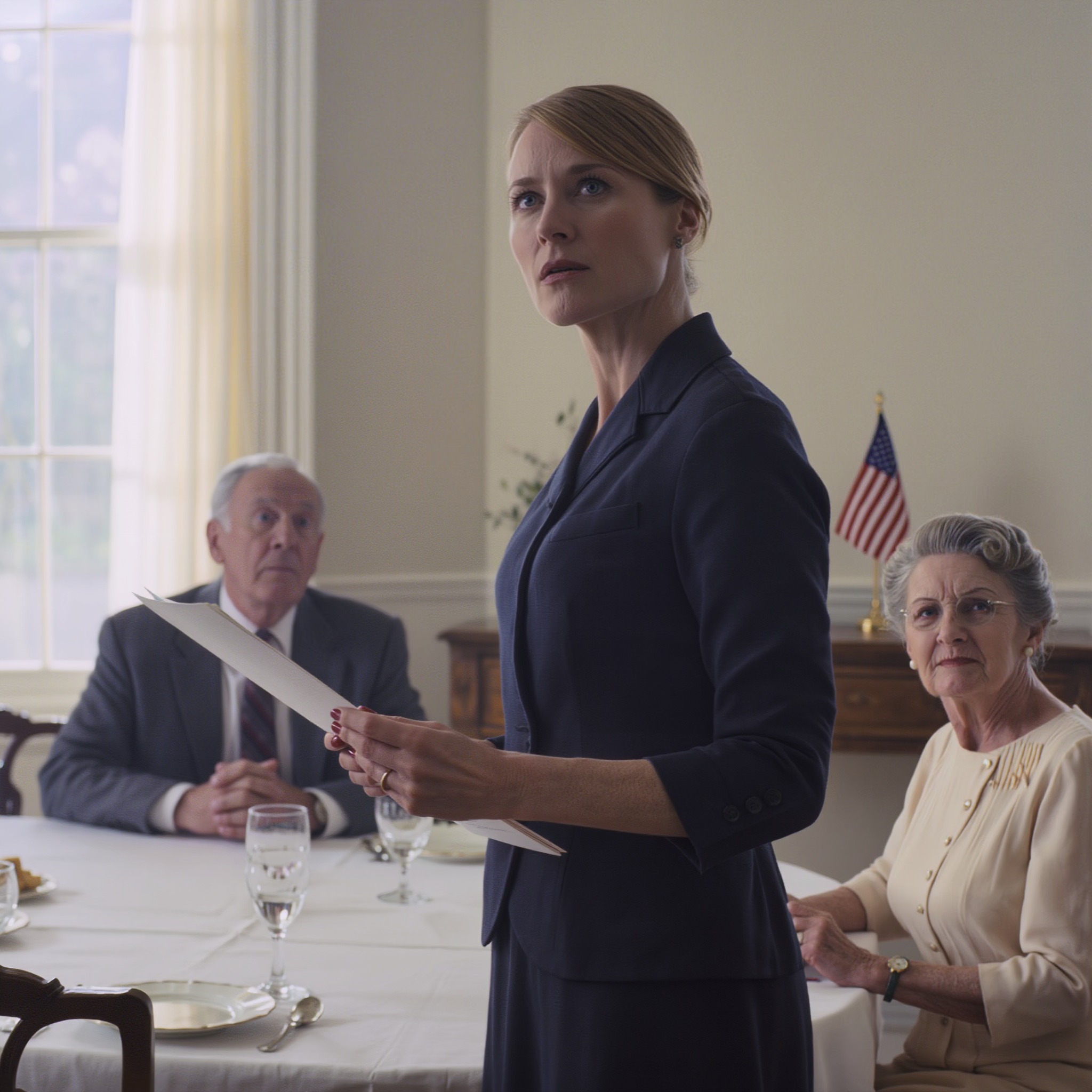
“Beautiful speech,” I said, taking the mic from her with a practiced ease I’d learned from presenting to boards of directors. “But you know, sometimes family is about forgiveness, too.”
The room went still. Even the violinist paused mid-note.
“Actually,” I continued. “I have something to share. A bit of an announcement, since we’re celebrating love and loyalty.”
Patricia’s eyes narrowed. Dad shifted in his chair.
“Most of you don’t know me well,” I said. “I’m Lydia Hart, founder and lead architect of Heartline Designs.”
A murmur rippled through the room. Someone near the back whispered, “Wait… the firm that did the downtown arts center?”
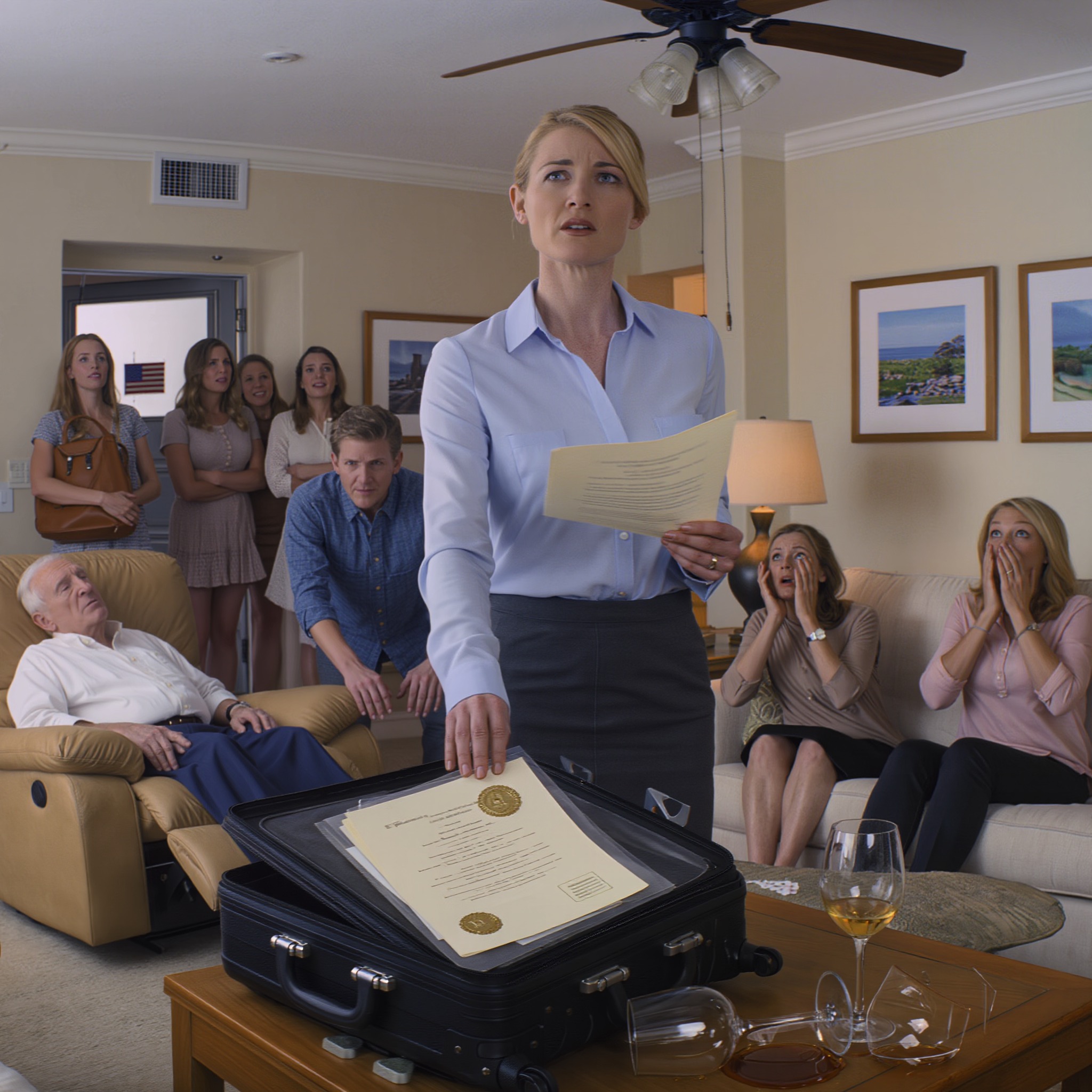
“My firm recently completed the renovation of the new downtown art center,” I confirmed. “And a few other projects. The city hall extension. The Riverside Pavilion.” I turned toward Haley and smiled. “And the bridal venue you’re standing in right now.”
Haley gasped softly, her hand flying to her mouth. Patricia went pale.
“You’re saying this place…?” she laughed tightly. “This place?”
“Yes,” I said. “I designed it. I own it.”
I looked at her directly. Not angry. Not smug. Just steady.
“So, in a way, you’re my guest today.”
The silence that followed was thick enough to taste.
Dad’s glass trembled slightly in his hand. His eyes—proud, broken, regretful—darted between Patricia and me.
“Lydia,” he finally whispered. “I had no idea.”
“You weren’t supposed to,” I said gently. “You made it clear you didn’t want to see what I could become.”
For once, Patricia had no script.
“Well,” I added lightly, “since loyalty and love are on the menu, I thought truth should get a seat at the table, too.”
A quiet laugh broke somewhere in the crowd. Not cruel. Just relieved.
I handed the mic back to the DJ. The violinist picked up the song again, a little shakier this time.
Later, on the patio under a canopy of string lights, they found me.
Dad approached first, hands shaking slightly. Patricia followed two steps behind, clutching her designer clutch like it could save her.
“Lydia,” he began, voice rough. “I didn’t know how much you’d accomplished. I’m… I’m proud.”
“Proud,” I repeated softly, finishing the sentence he seemed afraid to complete. “Or surprised?”
He looked away. “Both.”
Patricia spoke next.
“You have to understand, things were complicated,” she said. “We only ever wanted what was best for you.”
I laughed quietly. Controlled. But it cut through the night like glass.
“You mean what was best for you,” I said.
Her lips tightened.
“You told him I was jealous of Haley,” I continued. “That I was trying to take what wasn’t mine.”
“You were always…” she started, then stopped, regrouping. “Difficult.”
“I was grieving,” I corrected. “I was sixteen and my mother was gone and my father was gone in a different way.”
She flinched.
“I never wanted your daughter’s spotlight,” I said. “I just wanted my father’s respect.”
Dad swallowed hard. “I see that now,” he said. “I made mistakes.”
“Yes,” I nodded. “You did. But the bigger mistake was believing her version of me instead of asking for mine.”
He didn’t argue. His silence was confession enough.
For a moment, I let the quiet hang between us. The same quiet that had filled years of unanswered calls and forgotten birthdays.
Then I exhaled.
“I don’t hate you,” I said finally. “I stopped hating a long time ago. But forgiveness isn’t the same as access.”
He blinked. “Access?”
“Access to my life,” I said simply. “To my peace.”
Patricia stiffened. “You can’t mean that. He’s your father.”
“And he always will be,” I replied. “But if he wants a relationship now, it has to be built on truth. Not guilt. Not your whispers.”
I turned to Dad.
“So here are my conditions.”
His expression tightened, but he nodded. “All right.”
“One,” I said, holding up a finger. “You stop letting other people define your daughter. You want to know who I am? Ask me. Show up. Don’t send Patricia to speak for you.”
He nodded slowly, eyes wet.
“Two,” I continued. “If you come into my life again, you come with respect for the woman I’ve become, not pity for the girl you left.”
His jaw clenched. “Okay.”
“And three,” I added, glancing at Patricia, whose jaw was practically vibrating. “You let go of the need to compete. Because I’m not playing your game anymore. I built my own field.”
She looked away, face unreadable.
Dad reached out, hesitating before his fingers brushed mine.
“I want to try, Lydia,” he said. “I don’t know if I deserve a second chance, but I want to try.”
I studied him for a long moment. There was pain there, yes. But also humility. And maybe, beneath all the wreckage, something like love.
“Then start small,” I said. “Lunch next week. Just you and me.”
His eyes brightened. “I’d like that.”
Patricia started to protest, but he silenced her with a look I’d never seen him give her before.
“You heard her,” he said quietly. “Just me and Lydia.”
For the first time, I didn’t feel like the outsider in my own story.
I felt like the author.
A week later, I sat in a small café downtown. The kind with chipped mugs and real coffee, not the delicate cups that smell like money and performance. A tiny cloth napkin with a faded print of the Statue of Liberty sat under every glass—another little reminder of how far and how close home could be all at once.
Dad was late, but only by a few minutes. When he walked in, he looked nervous, like a man stepping into a confessional booth. He wore the same old watch I’d given him when I was twelve, the one Patricia once called cheap.
“Hi,” I said, standing.
“Hi,” he echoed, sitting down carefully, like the chair might break under the weight of everything we hadn’t said.
We didn’t talk about the past at first. We talked about small things. My projects. The city. How Haley’s honeymoon got delayed because of a flight cancellation. He told me he’d been having trouble sleeping. I told him New York was loud enough to cure insomnia.
For the first time in decades, I saw something in his eyes I hadn’t seen since I was a little girl.
Pride. Unfiltered and raw.
“I should have been there for you, Lydia,” he finally said, voice low. “Every time you needed me, I chose peace over truth. I thought silence was safer.”
“It’s okay,” I said.
“It’s not.”
“No,” I agreed softly. “It’s not. But you can’t rewrite what’s gone. You can only show up for what’s left.”
He nodded, eyes glistening.
“Then I’m here now,” he said. “If you’ll have me.”
We sat quietly for a while. The kind of silence that doesn’t ache anymore. It just breathes.
Before we left, he pulled something from his pocket—the velvet box that once held my mother’s locket. Inside was a folded piece of paper.
For your next design, it read in his handwriting. Maybe a home. One with room for both of us.
I couldn’t speak. I just smiled.
And for the first time, it didn’t hurt to do so.
Patricia never reached out again. Maybe she finally realized she’d lost control over a story she never owned. Haley, though, sent a postcard months later. A picture of the venue I’d built, lit up at night, river shining behind it. Two words were scribbled on the back.
Thank you.
I framed it and hung it near my drafting table. Not as proof for anyone else. Just as a quiet reminder that sometimes the people we think are our rivals were trapped, too.
Life moved on. Not perfectly, but honestly.
My work grew. My heart softened. My phone rang at more reasonable hours. When Dad called, it wasn’t to ask for anything. It was to say, “I drove past the community center today,” or “I saw your building on the news,” or sometimes just, “How are you, kid?”
One spring morning, I sat in my studio with the windows open, sunlight streaming across my sketches, the sound of laughter drifting up from the bakery below. I found myself sketching a chapel design.
Not for a client. For myself.
A place with high ceilings and warm wood. Light filtering through clear glass, not stained. A long aisle, wide enough for someone to walk alone or with a crowd. At the back, a simple entryway with a hook on the wall for a single gold locket.
I realized, halfway through tracing the lines, that I wasn’t drawing for the girl who had begged for a father’s arm. I was drawing for the woman who had learned, step by step, to walk without it.
For the girl who once walked down an empty aisle, wishing her father had been there. For the woman who later walked down another, her mentor’s arm strong beneath her hand, her phone buzzing with one hundred missed calls she didn’t need to answer to feel complete.
I set my pencil down, touched the locket around my neck, and smiled.
“When no one stands beside you, stand taller,” I whispered once more.
This time, not as armor.
As gratitude.
Because the aisle beside me might have been empty that day, but the woman who walked it?
She was never truly alone.
The aisle was empty beside me.
For a moment, that felt louder than the music. Louder than the rustle of chiffon and the whisper of programs folding in nervous hands. Louder than the soft scrape of dress shoes on polished wood and the distant hum of the old air conditioner rattling in the back of the church.
The string quartet kept playing like nothing was wrong. Violins wove Sinatra through the air, sweet and smooth, while a little American flag magnet on the metal exit door clacked softly every time a late guest slipped in. Outside, somebody’s pickup still had a faded flag bumper sticker half peeling in the summer heat. To everyone else, it was just a nice detail in a nice small-town wedding.
To me, it was a spotlight on the empty space to my right.
My bouquet felt heavier than it should have. White roses. The kind my dad used to bring home for my birthdays when it was just the two of us and a store-bought cake on the kitchen counter. Funny how they smelled different when you’re holding them alone.
“The aisle was empty beside me,” I thought again, like narrating a story about someone else.
My dad refused to walk me because my stepmom said I was stealing her daughter’s spot.
The music swelled right on cue. Everyone stood and turned to look at me. Phones rose. A little kid whispered, “Where’s her dad?” before someone shushed him. I could feel the questions in every stare tracing the blank space by my side, the gap where a father’s arm should have been.
I told everyone he was sick. That it was sudden. That he wished he could be here.
Lies glide easier than tears when mascara costs a fortune.
I inhaled, slow and controlled. The way my therapist had taught me. Feel your feet. Feel the floor. Breathe.
One breath in. One breath out. Left foot forward.
I smiled for the cameras, for my groom waiting at the end of the aisle, for my future mother-in-law clutching a tissue in the front row, for the pastor with his open Bible and rehearsed warmth. I smiled for everyone who didn’t know there was a storm behind that smile.
Right as I took the first step, my phone buzzed.
It was tucked into a hidden seam of my dress, a little rebellious detail I’d insisted on when the seamstress raised an eyebrow. “For emergencies,” I’d said. “Not everything can wait.”
It buzzed again. And again.
I lowered my eyes just enough to catch the edge of the screen when the dress shifted.
Dad.
Then again.
Dad.
We need to talk.
Even on my wedding day, he still had the power to shake me.
I kept walking. My heels clicked in a steady rhythm, like a metronome trying to impose order on chaos. Every step felt like walking through invisible questions.
Where is he?
What happened?
Why is she alone?
I glanced once, just once, toward the heavy church doors at the back. For a split second, I let myself imagine they’d swing open and he’d walk in, tie crooked, eyes wet, ready to say all the words I’d needed to hear at sixteen, eighteen, twenty-five.
They didn’t move.
The quartet glided into the next phrase. The little flag on the exit door stayed still. The aisle was still empty beside me.
That’s when the thought hit, quiet but sharp.
Maybe the aisle is empty for a reason.
“Lydia.”
The whisper came from behind me, soft but sure.
I turned my head a fraction, careful not to trip over sixty inches of satin, and saw her.
Eleanor.
She was in the last pew on the left, half standing already, teal scarf bright against a sea of beige dresses and navy suits. She’d driven up from New York that morning, texting me a selfie with a gas station coffee and a caption that read, Don’t marry anyone who can’t handle your brain.
Now she stepped out into the aisle like she owned it.
“You don’t walk alone, kid,” she murmured as she reached me, low enough that only I heard. “You built this life yourself. Let someone who actually saw that be beside you for the last thirty steps.”
My throat burned. For a heartbeat, the entire church blurred at the edges, like someone had smudged it with a thumb.
Then I nodded.
I shifted the bouquet to my left hand and slid my right arm through hers. Her grip was steady, warm, unshakable. We moved forward together.
One father missing.
One unexpected arm.
One choice not to shrink.
People whispered again, but the tone changed. Confusion softened into something else—curiosity, maybe. A few faces lit up in recognition. A couple of my coworkers who’d made the trip from the city straightened in their seats, pride flickering across their expressions.
At the end of the aisle, my groom, Noah, exhaled. I could see the relief in his shoulders, the way his jaw unclenched. His mother, who’d been pressing her lips so tight they almost disappeared, let them relax and dabbed at her eyes for real this time.
When Eleanor placed my hand in Noah’s, she leaned in, close enough that only the two of us could hear.
“Make this your story,” she said. “Not a consolation prize.”
Then she stepped back and joined the front pew like she’d belonged there all along.
The ceremony moved forward on autopilot. Vows. Rings. Laughter when my voice caught on the word “faithful” and Noah squeezed my fingers. A cheer when the pastor finally pronounced us husband and wife. Camera shutters clicked like crickets. The requisite whoop came from the back when we kissed.
But the whole time, my phone sat against my hip like a heartbeat that wasn’t mine.
By the time we ducked into the bridal suite between photos and reception, there were one hundred missed calls.
One hundred.
I stared at the screen as I slipped off my heels and sat on the little upholstered bench by the window. I could see the lawn outside, with its mason jar centerpieces and white folding chairs and iced tea dispensers decked out with cheaper paper flags the planner had found at the dollar store.
Dad. Dad. Dad. Unknown. Dad. Patricia. Dad.
I could almost see it—that moment when someone, probably Patricia, realized I hadn’t caved. The way she’d pivot from pouting to panicked. The way she’d shove the phone at him, insisting he “fix this,” like I was a plumbing leak, not a person.
One hundred times he reached for me today.
One hundred times too late.
I set the phone face down on the vanity next to my lipstick and the bouquet. One white petal had bruised at the edge, turning the faintest shade of brown.
The number 100 stared back at me from my reflection, even with the screen dark.
I touched the little gold locket at my throat.
My mother’s locket. The one Dad had hidden in my suitcase the day I left for college, back before Patricia had fully rewritten the script. The one thing she’d called “tacky” that I refused to give up.
Your mom would be proud. Don’t let anyone dim that light.
His handwriting had been shaky even then.
“When no one stands beside you, stand taller,” I whispered, the way I had in every dorm room and cheap apartment since. “Okay, Mom. I’m trying.”
A knock came at the door.
“Five minutes,” the planner called. “We need you for photos.”
“Be right there,” I answered.
I picked up my bouquet, squared my shoulders, and walked out of the room feeling strangely taller, even in bare feet.
That day was supposed to be the beginning of a new chapter. It was. Just not the one my father thought he could call in and edit from a distance.
The truth was, this story hadn’t started with a wedding aisle.
It started the night my dad met Patricia.
I was sixteen. He’d been invited to some real estate gala downtown, the kind of event with ice sculptures and shrimp towers and people who said “leveraging assets” like it was foreplay. He came home at midnight smelling like expensive cologne and champagne, a little dazed smile still hanging around his mouth.
“There was this woman,” he’d said, leaning against the doorway of my room like he wanted to tell me a secret. “Patricia. She—uh… she knows everyone.”
I’d been half-asleep, half-reading a textbook. My mother had been dead two years. Grief had settled into the house like dust in corners no one bothered to reach. Part of me was glad he’d gone out. Part of me was afraid to move forward in case we left her behind.
“That’s good,” I’d said, closing the book. “You had fun?”
He’d nodded, eyes bright. “Yeah. Yeah, I did.”
Six months later, her toothbrush was in our bathroom.
Patricia was polished and charming, all pearls and praise. She laughed too loudly at his jokes and too softly when I spoke. She’d show up to my school events with a perfect blowout and a camera, but somehow never got any pictures with me centered. Haley did, though.
Haley arrived in our lives wrapped in designer sweaters and quiet apologies. “I’m sorry,” she’d said the first time we met, voice barely above a whisper. “Mom didn’t tell me about you until last month. I didn’t know.”
She was a year younger than me. Soft-spoken. Effortlessly adored. The kind of girl whose teachers wrote “joy to have in class” on every report card. Standing beside her felt like standing next to a magazine ad version of girlhood. Crisp. Curated.
Dad’s face softened when he looked at her in a way I hadn’t seen in years.
When he looked at me, he hesitated.
It started small. An offhand remark from Patricia about my clothes being “a bit too loud.” A comment about my tone when I disagreed. A suggestion that I “follow Haley’s example.”
“Haley’s grades are better,” Patricia would say with a sympathetic little wince. “You two should study together. She could help you.”
“You should learn to cook like Haley,” she’d add another day, as Haley pulled a pan of lemon bars out of the oven. “She made the loveliest treats for the church bake sale.”
“Your father worries you might end up alone, Lydia,” she told me once, folding my laundry in my room like she was doing me a favor. “Men get intimidated by… strong opinions.”
Every word chipped away at something sacred between Dad and me. Every comparison rewrote his mental file on who I was. Not enough. Too much. Difficult.
One night, I woke to my name puncturing the silence.
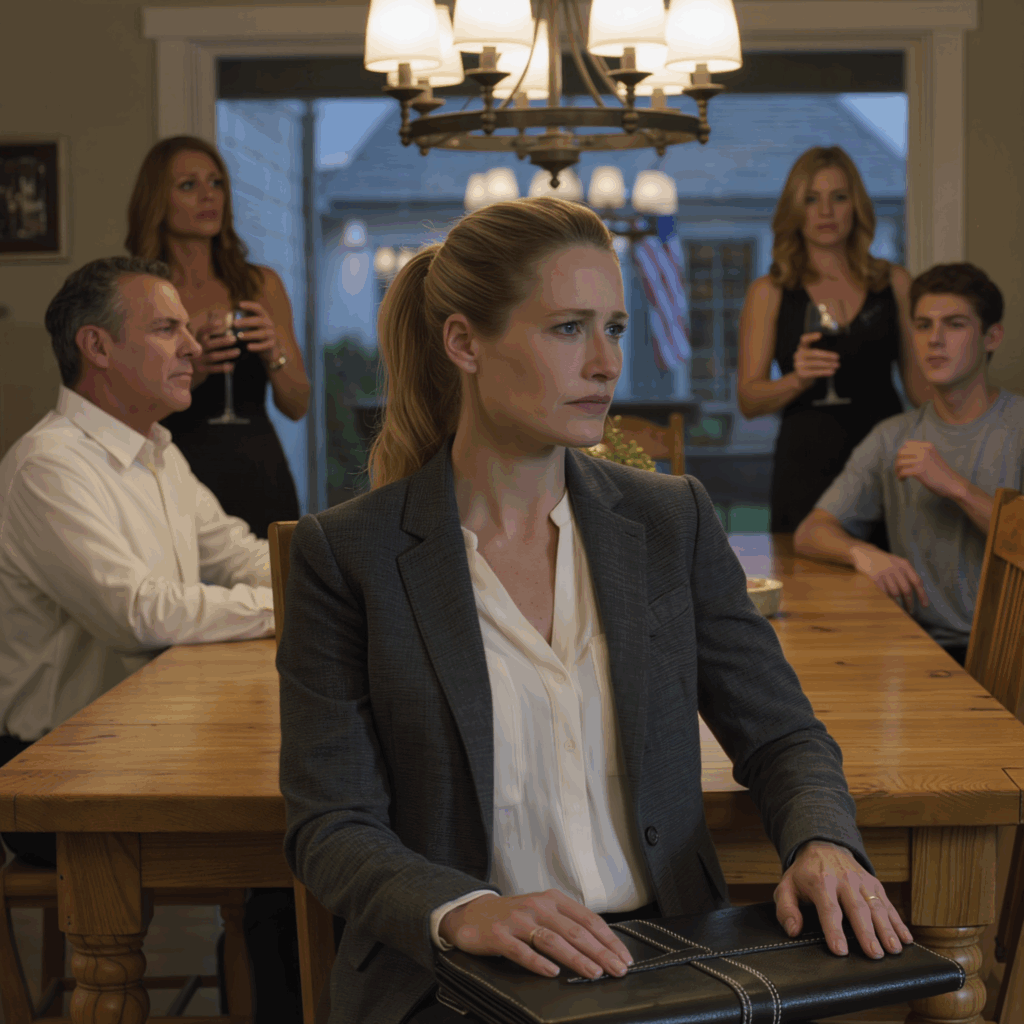
“She’s just jealous,” Patricia was saying in the kitchen. I stopped halfway down the stairs, the wooden step under my bare heel cold. “You give her too much freedom. She’s trying to take what’s Haley’s. She’s my daughter.”
“She’s my daughter too,” Dad’s voice cracked. “You’re imagining things.”
“Am I?” Her words were smooth, sharp. “She flirts with every boy Haley likes. She sulks when you spend time with us. She’s always testing you. You think that’s an accident?”
I swallowed hard, my heart pounding so loud I was sure they’d hear it.
“She’s grieving,” Dad said weakly.
“So are you,” Patricia countered. “You think your wife would want you to let Lydia manipulate you with that grief?”
Silence.
Then a chair scraped. A glass clinked. I crept back up the stairs, each step heavier than the last.
That night, Dad didn’t come to my room like he used to. No soft knock. No “Goodnight, kiddo.” Just a gap where a father’s presence should have been.
The gaps started stacking up after that.
The missed choir performance. The “forgotten” graduation photos. The way he could never quite meet my eyes when Patricia was close enough to hear.
Each absence was its own betrayal. Small enough to excuse. Big enough to scar.
College was my emergency exit.
The day I left, Patricia stood by the car with her arms folded loosely, a sympathy smile plastered on like makeup. A small patriotic banner hung from our front porch, leftover from the Fourth of July BBQ she’d hosted for all the neighbors. Red, white, and blue streamers flapped in the breeze like an accusation.
“Good luck, Lydia,” she said. “Don’t forget where you came from.”
It sounded more like “Don’t forget who controls the narrative.”
I hugged Dad goodbye. He smelled like aftershave and the same coffee he’d drunk every morning of my life. His arms around me felt… formal. Careful.
“I’m proud of you,” he said, the sentence hanging in the space between us instead of landing on me.
“Thanks,” I replied. “Try not to let Patricia redecorate my room in the first twenty-four hours.”
He chuckled, weak. “No promises.”
He didn’t tell me about the velvet box tucked in my suitcase.
I found it that night, in a dorm room that smelled like bleach and someone else’s dreams. Inside was my mother’s locket and a note.
Your mom would be proud. Don’t let anyone dim that light.
I pressed the cool gold against my lips and whispered, “When no one stands beside you, stand taller.”
It became my bet with myself. My quiet promise.
If no one showed up, I would.
College taught me plenty: how to pull all-nighters without collapsing, how to pretend cheap instant coffee was a personality trait, how to stretch ten dollars into three meals if you knew which diners offered student discounts, how to be the girl who never went home for breaks.
My major was architecture. Dad had called it impractical.
“Long hours. Unstable income,” he’d said, glancing at Patricia, who nodded sagely. “You sure you don’t want something safer?”
“Buildings outlive opinions,” I’d answered. “I like those odds.”
Now, at midnight, hunched over blueprints in the campus library, those odds felt worth it. The staff knew me by name. They let me stay a few minutes past closing sometimes when I was in the zone.
One of them, a woman in her sixties with glasses on a chain, once slid a mug of vending machine hot chocolate toward me.
“You remind me of my daughter,” she said. “She built her own thing too.”
I hadn’t asked what that meant. I just thanked her and traced another line.
During junior year, Eleanor landed in my life like a controlled explosion.
She walked into our studio for a guest critique wearing a bright scarf and boots that meant business. Her hair was silver, her eyeliner perfect, and her voice carried like she’d spent a lifetime commanding rooms full of men who thought they knew more than she did.
She stopped in front of my model. Tilted her head. Didn’t rush.
“You did this?” she asked.
“Yes,” I said, bracing for impact.
“You have vision, kid,” she said. “You just don’t believe it yet.”
Under her guidance, I learned not just how to design buildings, but how to occupy space.
She told me stories about the eighties, about walking into boardrooms as the only woman there. About being talked over. About being underestimated.
“People underestimate women until we make them regret it,” she always said, grinning. “So make it worth the regret.”
New York came next. The internship at a boutique firm that paid just enough to keep me above water. I couch-surfed. I ate dollar slices and pretended my back didn’t hate me. The subway became my moving art gallery, every line a new set of buildings to study.
My first paycheck—$1,247.53 after taxes—felt like a lottery win. I sent $600 straight to my loan servicer. I put $600 into an online savings account I named Freedom. I used the $47.53 left to buy groceries and one cheap bottle of wine I drank with my roommate out of mismatched mugs.
Freedom grew in slow, stubborn increments.
By twenty-nine, I used that account to rent a cramped studio above a Brooklyn bakery and register Heartline Designs with the state of New York. My firm. My name.
The landlord grumbled about the paperwork. The bakery owner downstairs brought me day-old cinnamon rolls every Sunday and asked, “You gonna be famous, kid?” every time I walked by.
“Define famous,” I’d answer.
“To me,” she’d say.
My first big break was the community center in Brooklyn. A nonprofit board took a chance on me because I was cheap and stubborn and my designs made them feel something.
On opening day, kids ran across floors that used to be unsafe. Seniors sat in sunlight instead of under flickering fluorescent bulbs. Volunteers lined up at a registration desk we’d built from reclaimed wood, under a simple wall where a local artist had painted a mural of open hands and, in one corner, a tiny stylized flag reminding everyone that community could be its own kind of patriotism.
Eleanor stood in the front row, clapping louder than anyone.
“Your mother would have loved this,” she whispered, wiping at her eyes.
I believed her.
By thirty-two, I bought the building from the landlord who was tired of fixing the roof. By thirty-three, I bought a small townhouse in Queens with creaky floors and a stoop that faced west. I painted the front door a deep blue and hung a simple brass mailbox. Inside, I set a little ceramic dish on the console table just for my locket and keys, like an altar to the life I’d built.
I didn’t post any of that online. Social media got sunsets and coffee cups. Not contracts or closings. When Dad called on holidays, I let him believe I was “doing fine.”
He didn’t ask for details. I stopped volunteering them.
Then came the text.
Haley’s getting married. She’d love for you to come.
No apology. No acknowledgment of birthdays missed, of calls ignored, of the ways he’d chosen silence over my side of the story. Just a line that framed this as a favor to Haley, not him. Like I was a distant cousin whose presence would round out the photos.
Part of me wanted to reply with a single word.
No.
Instead, I stared at the screen for a long time. I thought about the girl who’d listened to their argument on the stairs. About the young woman who’d left for college clutching a locket and a note. About the architect whose designs were reshaping streets while her own family pretended not to see.
I thought about all the stories Patricia had told about me.
Then I thought about something else: narrative control.
If I went, I could tell my own story. Not in a speech, not in a scene, but simply by existing in the room she thought she owned.
I typed back.
I’ll be there.
The wedding was everything Patricia loved: chandeliers, champagne towers, people with practiced laughs. If you squinted hard enough, you could see the price of every detail.
You could also see the cracks.
The way Patricia’s smile tightened when people mentioned the venue. The way Dad’s shoulders hunched when anyone asked what I’d been up to. The way Haley’s eyes flicked between us with a hope she tried to hide.
When I stood up to speak after Patricia’s toast, it wasn’t to destroy them. It was to free myself.
Owning the venue was a twist of fate and persistence. Patricia had chosen it because it was trendy and beautiful. She hadn’t bothered to read the plaque by the entrance or the “About” page on the website.
Heartline Designs – Founder: Lydia Hart.
Truth has a way of sitting quietly in plain sight until someone points at it.
“I own this place,” I said that night, steady and calm.
You could feel the room tilt.
After, on the patio, under string lights that hummed with summer bugs and electricity, I laid out my conditions to Dad.
One. You stop letting other people define who I am.
Two. You meet the woman I became, not the girl your wife resented.
Three. You stop treating a relationship with me like something you can drop and pick up when it’s convenient.
He said he wanted to try. I decided to let him.
Lunch at the café with chipped mugs and the little Statue of Liberty napkins was the first real deposit he made back into us.
He showed up. He apologized without making himself the victim. He listened when I spoke instead of rushing to defend himself.
That was new.
We made it a habit.
Once a month at first. Then twice. Sometimes we went to the same café. Sometimes we met halfway between my city and his suburb in some forgettable chain restaurant off the interstate where the servers wore name tags and the iced tea came in giant plastic cups with free refills.
He asked about my projects. I showed him photos on my phone of before-and-after shots. He ran his fingers over the glass like he could touch the bricks.
“You did this?” he asked every time, still surprised.
“Yes,” I always said. “With a team. But yeah. I did this.”
Patricia didn’t join us. That was one of my conditions, unspoken but understood. At first, I think she thought it was beneath her. Later, I realized she’d lost something she could no longer spin.
Her monopoly on the narrative.
Word got around town, because small towns are wired that way. People who’d once nodded along to her stories began to ask questions.
“You see Lydia much?” old neighbors would ask Dad at the grocery store.
“Yeah,” he’d answer. “We meet up. She’s… she’s doing big things.”
Somewhere between one lunch and the next, his pride stopped sounding like surprise and started sounding like belief.
Haley would text me sometimes, little things at first. A picture of a recipe she’d tried. A link to an article about one of my buildings. A meme about sisters that made me huff out a laugh in the middle of a meeting.
“I didn’t know how to push back against Mom back then,” she wrote once. “I’m sorry.”
“Me either,” I replied. “We were kids. We learned.”
Life didn’t magically become a montage of perfect moments. Dad made mistakes. He still missed a call now and then. I still flinched sometimes when something reminded me of the old days. Patricia lobbed a few last attempts through group messages and holiday invites, trying to reclaim the role of coordinator.
Eventually, she stopped.
I think she realized a simple, terrifying truth: my life continued without her.
Years passed.
Heartline Designs outgrew the Brooklyn office. I hired more staff. We took on bigger projects. One day, a city official sat across from me and said, “We want you to bring the same energy you brought to that community center… to a courthouse renovation.”
I thought about the sixteen-year-old girl listening to a trial she was never allowed to testify in—the trial of her own reputation in her own kitchen. Updating a courthouse felt like karmic symmetry.
On opening day, a judge shook my hand and said, “You’ve given this place back to the people.”
I smiled and thought, I’m just getting practice.
Noah and I built our own life. He never tried to fix my history. He just held space for it. When I woke from old nightmares about empty aisles or muffled arguments, he’d roll closer, wrap an arm around me, and murmur, “You’re here. You’re not there anymore.”
We talked about kids one day over takeout and zoning diagrams spread across the table.
“Do you want to be a dad?” I asked.
He nodded. “Someday. Mostly, I want to see you get the chance to be the parent you never had.”
I wasn’t sure if that hurt or healed. Maybe both.
It took another three years before I was ready.
When I finally saw two pink lines on a test in our tiny bathroom, I sat on the floor, locket in one hand, test in the other, and laughed and cried at the same time.
I called Eleanor first.
“Well,” she said. “Guess I better start practicing being the bad influence grandma.”
Noah cried when I told him. Happy, messy tears.
My father found out a week later, in a booth at that same café.
“You’re going to be a grandpa,” I said, pushing the sonogram across the table.
His eyes filled instantly. He pressed his fingers to his mouth like he was holding in a sound.
“I—” he started, then stopped. “Lydia, I… Thank you for telling me.”
“Of course,” I said. “I want my child to know you. Under the new terms.”
He nodded so hard his glasses slid down his nose.
The day our daughter was born, all my old fears crowded the delivery room. Every word Patricia had ever said about me. Every doubt about whether I could heal enough to raise someone without letting my scars spill over.
Then they placed this tiny, wrinkled, furious person on my chest and she grabbed my finger with surprising strength, and my brain went quiet.
“Hi,” I whispered. “I’m your mom. No one gets to rewrite that.”
We named her Grace.
When she was six months old, we drove up for Thanksgiving at my dad’s. It was the first holiday I’d chosen to spend there in over a decade.
The house looked smaller. The porch banner was gone. The flag holder by the door still had its bracket, but he’d replaced the tattered old flag with a new one, clean and crisp, hanging straight.
Patricia wasn’t there.
They’d separated quietly, I’d learned. Sometimes consequences arrive like sirens. Sometimes they arrive like moving boxes and legal envelopes.
Inside, Dad had rearranged the living room. The framed family photo Patricia once insisted hang over the mantel was gone. In its place was a photo of the Brooklyn community center ribbon-cutting, me in a hard hat, Eleanor clapping beside me. Next to it was a picture of Grace drooling on his shoulder the first time he held her.
“You… decorated,” I said, stepping inside with Grace balanced on my hip.
He shrugged, suddenly shy. “Trying something new.”
We sat down to a dinner he’d clearly over-prepared for, turkey and stuffing and three different pies because “I didn’t know what you liked now.”
At one point, Grace flung mashed potatoes on his shirt and he laughed instead of flinching.
“You’re a mess,” he told her.
“So were you,” I answered.
He met my eyes and smiled, a little sad, a lot grateful.
Later, while Noah rinsed dishes and Grace napped in the guest room, Dad and I sat on the back steps. The air was cold. The sky was clear. You could see a couple of stars if you looked past the glow of the neighboring porch lights.
“I think about that day,” he said quietly. “Your wedding.”
I didn’t pretend not to know which part he meant.
“The aisle?” I asked.
“The calls,” he said. “I called a hundred times.”
“I know,” I said. “My phone kept count.”
“I was so sure you’d break,” he admitted. “That you’d pick up. That you’d give in the way I always did. I thought… I thought I could fix it in the parking lot. Tell you that it was complicated. Ask you to understand.”
“And now?” I asked.
He swallowed. “Now I’m glad you didn’t answer,” he said. “If you had, maybe I wouldn’t have been forced to see who you’d become without us. Without me.”
I looked at him. Really looked at him. At the gray in his hair. At the lines etched deeper around his eyes. At the way his hands folded together, empty now that he had no script to hold.
“I didn’t walk you down the aisle,” he said. “I let my fear and my wife’s pride decide that. I thought I was keeping the peace.”
“You were keeping Patricia comfortable,” I said, not cruel, just honest.
He nodded. “Yeah. I was. And I lost you.”
“You didn’t lose me,” I corrected. “You set me down and walked away. There’s a difference.”
He winced. “I know I don’t deserve a clean slate.”
“No one does,” I said. “We earn the next page one line at a time.”
He glanced through the kitchen window where Noah was stacking plates and humming to himself. “I’m glad you didn’t wait for me to decide you mattered,” he said. “You acted like you did even when I didn’t.”
“I didn’t always,” I admitted. “But I practiced until it felt real.”
We sat there in a silence that finally felt like shared air instead of a gulf.
Inside, Grace cried out once, then settled. The little flag on the porch whispered against its pole in the breeze.
Years later—after more lunches and birthdays and quiet amends, after Eleanor passed away and left me her battered drafting stool and a note that said, Keep breaking ceilings, after Dad downsized to a smaller house and gave me the keys to the old one with a gruff, “It’s just wood without you in it”—Noah and I decided to renew our vows.
Our ten-year anniversary seemed as good a time as any.
We had it at a small chapel I designed myself, just outside the city. A test run for a project I’d been dreaming about: a place for weddings that didn’t look like the glossy magazines, that had room for imperfect families and chosen ones.
The chapel had high ceilings and clear windows. No stained glass, just sunlight. Pews handmade by local carpenters. A simple aisle, wide enough for a bride to walk alone or with a football team if she wanted.
On the day of our vow renewal, I stood at the back again in a simple dress, holding a bouquet of white roses and eucalyptus. My locket rested against my collarbone, warm from my skin.
Grace, now nine and missing two front teeth, bounced beside me as the string quartet started to play. They weren’t doing Sinatra this time. At her insistence, they learned a modern song and turned it into something classical.
“Are you nervous?” she asked.
“A little,” I admitted. “Are you?”
She grinned. “No. I like your dress.”
Noah waited at the front, older and even more himself, a smile already breaking across his face.
The doors were open. The air smelled like spring and pavement and a little bit of sawdust from the construction site next door. In the pews, my staff sat beside my neighbors, beside the bakery owner, beside Haley and her husband, beside people who’d walked into my life from angles I could never have predicted.
In the second row, there was an empty space we’d left on purpose.
Behind me, I heard the soft tap of a cane.
“Ready?” Dad’s voice asked.
I turned.
He wore a navy suit that fit a little looser than it used to. His tie was crooked. His eyes were bright. He held out his arm, tentative.
“I know I didn’t earn this,” he said quietly. “But if you’ll have me, I’d be honored to walk you this time. As far as you’ll let me.”
I looked at Grace. She nodded emphatically.
“Take him,” she stage-whispered. “He practiced.”
I laughed, the sound surprising both of us.
“Okay,” I said. “But we do this on my terms.”
“Of course,” he said.
“You walk beside me,” I told him. “Not ahead. Not pulling. Not pushing. Just beside.”
He swallowed. “Deal.”
I slipped my left hand through my father’s arm and my right hand into my daughter’s. Three generations. One new pattern.
The quartet played. The room stood. Somewhere, someone sniffled loudly enough to make a few people chuckle.
We walked.
I felt my father’s arm, steady but not steering. I felt Grace’s smaller hand, squeezing in bursts of excitement. I felt my own heartbeat, strong and sure.
Halfway down, Dad leaned in slightly.
“I’m sorry,” he whispered. “For every step I missed.”
“I know,” I said. “Keep walking.”
At the front, Noah’s eyes shone. Behind him, through the clear windows, I could see the faint blur of a flag on the neighbor’s porch across the street, waving lazily in the breeze. Not a symbol of a perfect family or a performative holiday. Just a piece of fabric catching light.
We reached the end of the aisle.
“I’ve got it from here,” I told Dad.
He nodded, eyes wet. He kissed my cheek, light as a promise, and stepped back to sit beside Grace in the front pew.
Noah took my hands.
“Round two?” he said, smiling.
“Round two,” I answered.
Our vows this time were shorter. Less about forever and more about every day. Less about who we hoped we’d be and more about who we’d learned to become.
When the officiant pronounced us married again, the applause felt different. Not like a performance had gone well. Like a building had passed inspection after a long renovation.
At the reception, there were no champagne towers. There were sheet cakes from the bakery downstairs from my first studio and a playlist made by Grace. People danced badly and wholeheartedly.
Later, when the music softened and the room thinned out, I stood alone in the chapel aisle.
I ran my fingers along the wood of the pews, the grain smooth under my skin. This building had started as a sketch on my drafting table. Now it was real. Solid. Full of echoes and laughter and vows that acknowledged the mess instead of pretending it didn’t exist.
I walked the aisle again, just myself this time.
Halfway down, I stopped, touched my locket, and closed my eyes.
When no one stands beside you, stand taller.
My mother’s words had carried me through empty rooms and crowded ones, through late nights and early mornings, through the silence of a phone that didn’t ring and the noise of one that rang too much.
Now, standing there, I realized something else.
I had stood taller.
And in doing that, I’d made room for the right people to stand beside me.
Eleanor with her thunder voice. Noah with his quiet steadiness. Grace with her fierce little heart. Dad, stumbling, trying, finally learning to walk beside me without needing to lead.
The aisle beside me had been empty once.
It would never be again—not because someone else filled it, but because I finally knew I did.
I opened my eyes and took the last few steps forward, not toward an altar this time, but toward the doors. Toward the city. Toward whatever came next.
Outside, the sky was soft blue. The flag across the street fluttered lazily. Somewhere down the block, a kid laughed. A bus hissed to a stop. A siren wailed faintly in the distance and then faded.
Life kept moving.